Thanksgiving decorating does not have to begin with a big centerpiece or a whole new room. Sometimes a small piece of wood on a shelf makes the house feel ready for people to gather. I love the way a handmade-looking shape can bring warmth without asking the table to stop being a place for dinner. These four little ideas—a pumpkin, a trio of leaves, an acorn garland, and a turkey for the table—share a quiet palette of wood, linen, and soft autumn color. Each could have a place in the house long before the meal is served.
What is the first sign of the season in your home? Maybe it is a bowl of fruit on the counter or the tablecloth you bring out once a year. I like starting with whatever already feels like us and then adding one small wooden detail. It makes the change feel personal, and it gives me plenty of space to actually cook, set the table, and welcome everyone in.
A wooden pumpkin for the sideboard
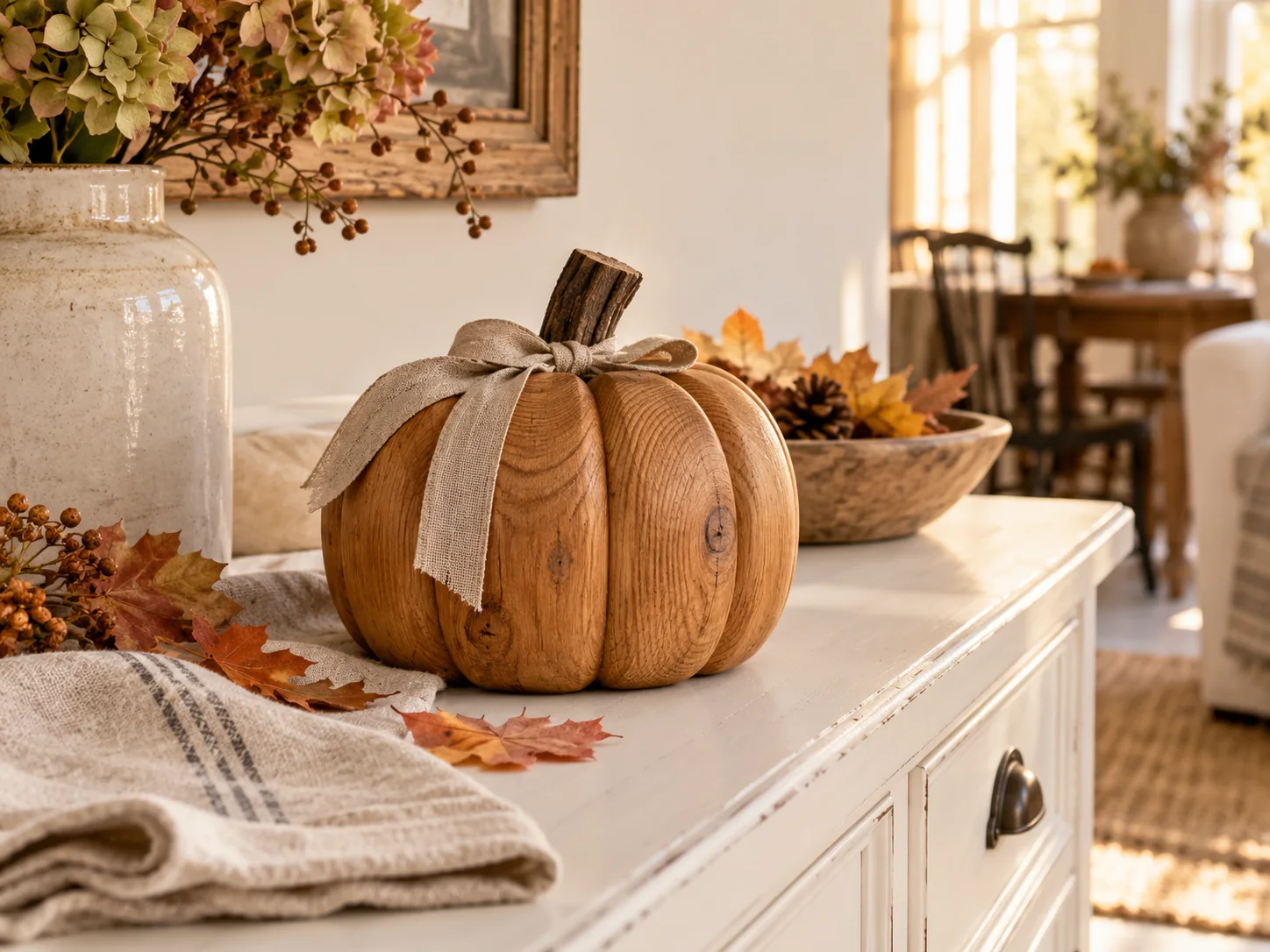
A pumpkin does not have to be bright orange to say autumn. This little wood one has rounded segments, visible grain, a short stem, and a loose linen ribbon. Against a white sideboard, the warm wood becomes the main color. A folded towel and a few leaves give it company, but the shape still has enough space around it to be seen.
I would put a small pumpkin where I pass it often rather than trying to make it the star of the dining table. An entry console, a coffee bar, or a shelf beside the kitchen can carry a quiet seasonal note. If there are already mugs and bowls in that spot, I would move one thing before adding the pumpkin. The goal is a home that feels welcoming, not a surface that can no longer do its ordinary job.
The broad curves are what make this idea approachable. A simple version could be built from a few wood pieces with carefully softened edges; a different version might be a single carved form. The photograph is inspiration for the shape and styling, not a measured plan. If I were making one, I would decide the finished size first, choose a stable base, and think about where the stem and ribbon could be attached without leaving sharp edges or loose parts in a busy area.
Would you leave the wood natural or make it a little darker? I like the warm tone here because the grain stays visible, but a paler pumpkin might look lovely beside a darker cabinet. A sample of the finish next to the actual furniture can tell you more than a color name on a screen. Let the room help make the decision.
Leaves that stand on their own
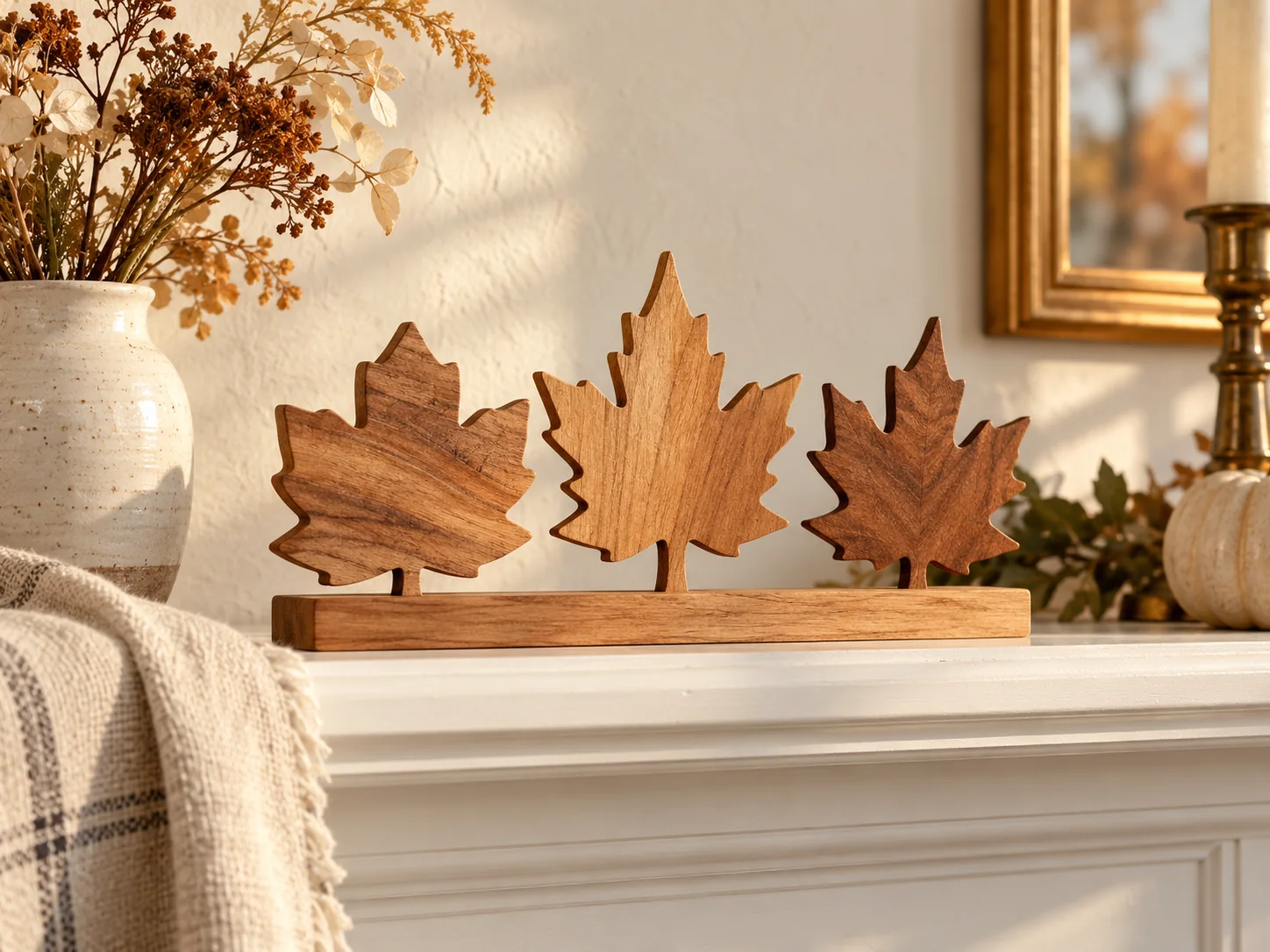
Three leaf silhouettes in a slim wooden base give a mantel a little rhythm. One stands taller in the middle, and the two on either side are different enough that the group feels relaxed. I like how the wood tones vary without turning the display into a rainbow of fall colors. The white wall gives their outlines room to breathe.
This idea works because you can understand it from across the room. The shapes are simple, and their height changes just enough to keep the row interesting. Up close, the grain and the softened edges reward another look. If your mantel is narrow, a small group like this may be easier to live with than a deep arrangement of vases and candles. The base keeps the leaves together visually, so you can move the whole accent when you need the space.
If I were planning a version for a shelf, I would make a paper mockup before cutting wood. Hold it where the piece will stand. Does the middle leaf need to be shorter to fit beneath a picture frame? Would two leaves be better than three? Is the base deep enough to sit securely? A little sketch and a few minutes with cardboard can settle those questions before a saw is involved.
The best part is that leaves do not belong only to one holiday. You could bring them out when the air begins to change and keep them through Thanksgiving. After the table has been cleared, they can still feel right on a shelf. I love seasonal pieces that do not need to be packed away the minute one evening ends.
A garland with a softer line
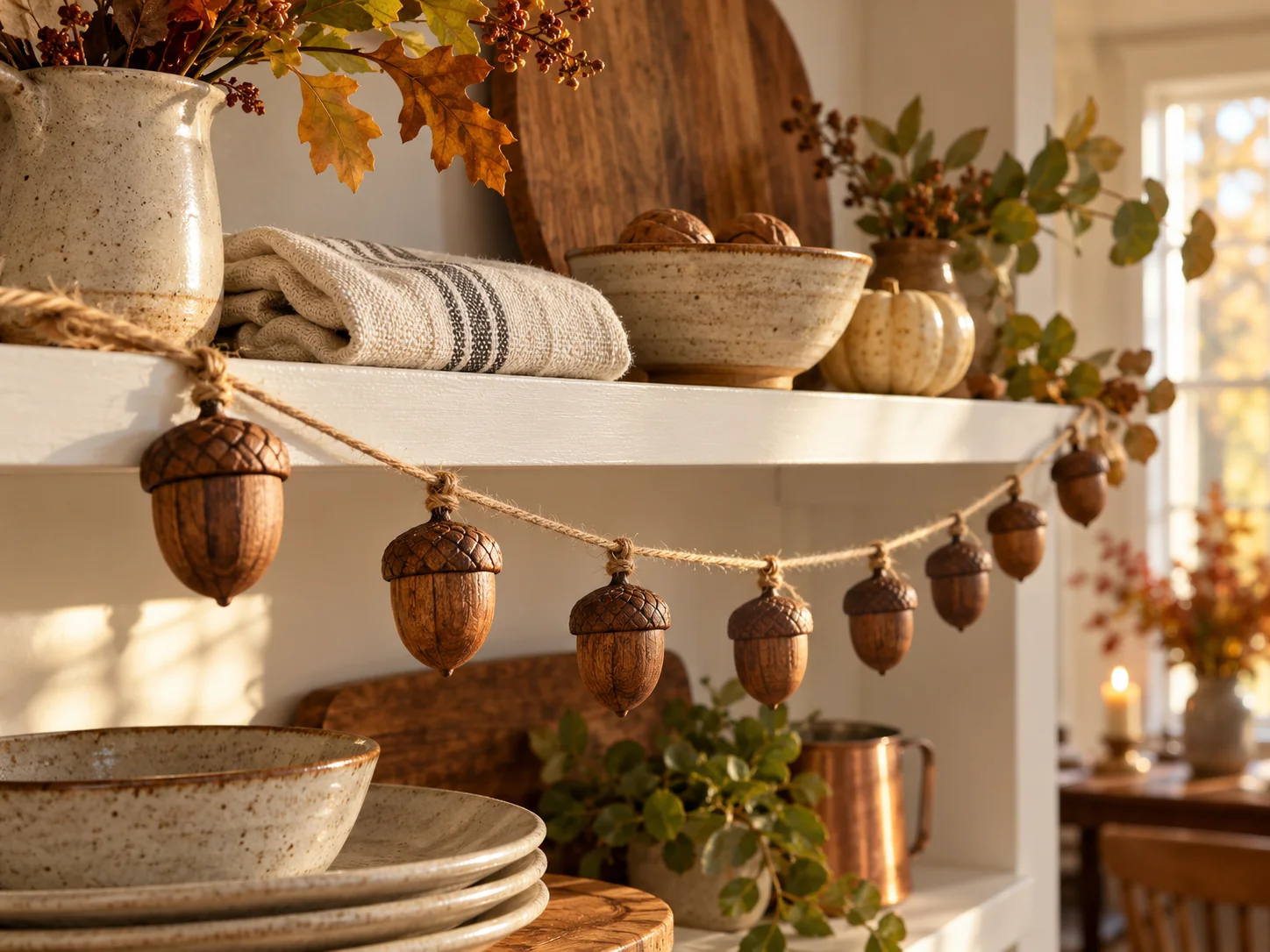
The acorn garland adds something the standing pieces cannot: a loose, gentle line. The dark little wooden acorns hang from natural twine across the front of an open shelf. Their repeated shapes feel playful, while the darker stain keeps the arrangement grounded beside white paint, pottery, and a folded kitchen towel.
I would use a garland where it can be seen but will not get in the way of a door, a drawer, or anyone reaching for a plate. A shelf that holds everyday dishes can be lovely, yet it still needs to work. Before hanging anything, I would open nearby cabinets and walk the route people take through the room. A strand that looks charming in a photograph can feel annoying if it catches a sleeve every morning.
There is room to make the spacing your own. A few acorns with a little air between them feel light. More closely spaced pieces would make a stronger border. I would lay them on the counter before tying anything, then step back to see whether the line feels even enough without looking rigid. That small pause can make the finished garland feel much more considered.
If you make a garland, secure its parts for the place it will be used and keep small pieces and cords away from young children and pets. It is decorative, and I would place it where it can stay decorative rather than become something to pull or chew. The warmth of a homemade accent is best when it fits comfortably into the life of the room.
A little turkey at the table
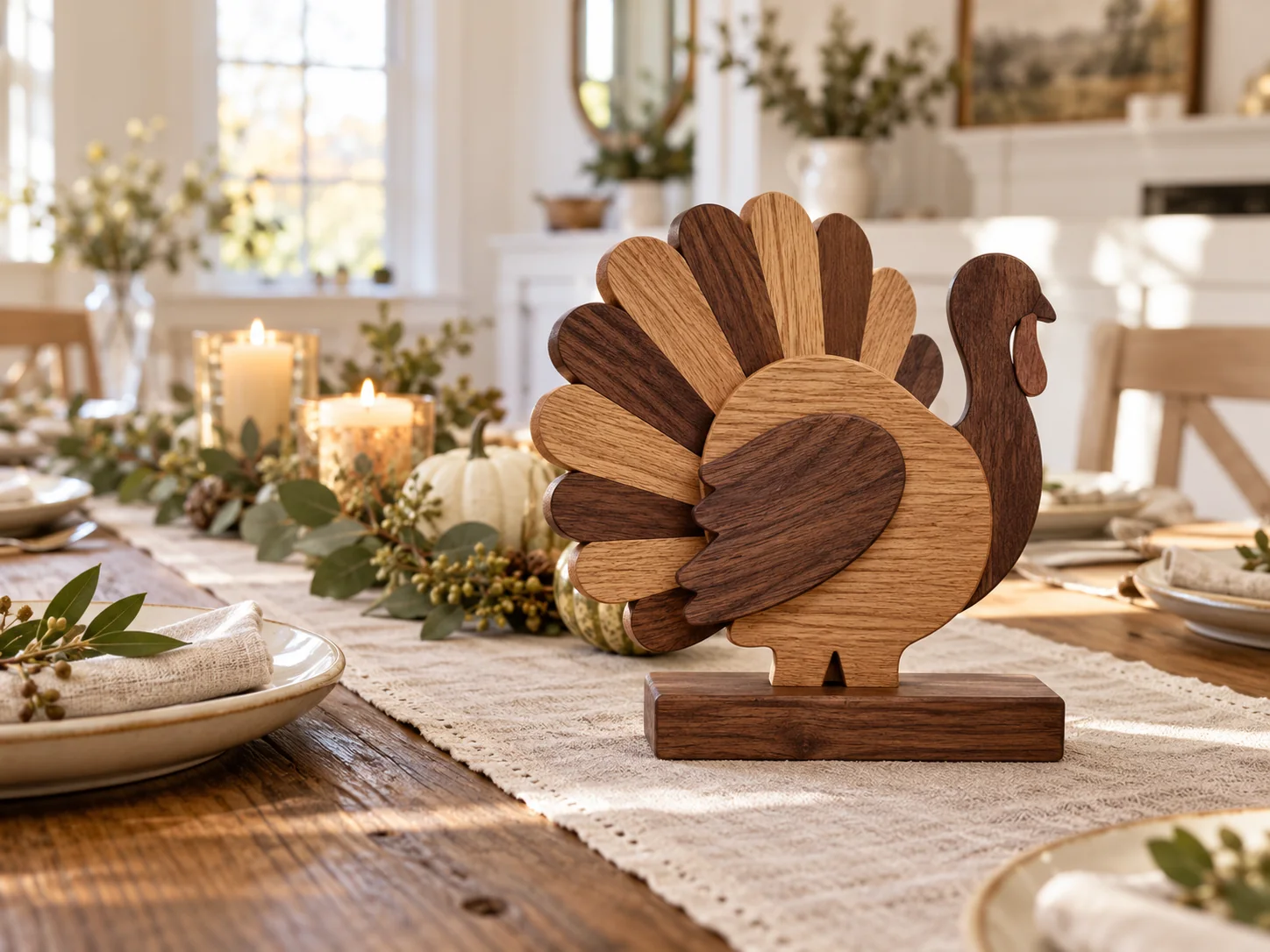
This turkey is the most clearly Thanksgiving-specific of the four. Its fan tail uses alternating wood tones, and the simple silhouette stands on a small base at the end of a linen runner. I like that it is recognizable without a painted face or a lot of extra detail. The layered wood does the decorating.
A dining table is a working surface on Thanksgiving. Serving bowls arrive, plates move, someone reaches across for another helping, and the whole arrangement changes as people settle in. That is why I would keep a wood accent like this small and place it at the end of the runner or on a sideboard when the meal begins. It can bring a smile without making everyone navigate around a tall centerpiece.
The two wood tones make the tail interesting from a distance, but I would choose them beside the table itself. If the tabletop is dark, a lighter body may help the silhouette stand out. On a pale table, a darker base can give it definition. I would not try to match every chair and cabinet. A little contrast lets the piece belong without disappearing.
The photograph suggests a layered shape, but it does not give a cut pattern, thickness, or fastening method. For a small standing piece, I would pay attention to a stable base and smooth edges, especially because it will be handled when the table is set. It is the kind of detail that looks simple from the front and earns its place by being easy to move and easy to enjoy.
Let the four ideas share a room
The pieces do not have to sit together to feel connected. The pumpkin can greet you on the sideboard, the leaves can live on the mantel, the acorns can add a line to a shelf, and the turkey can appear when the table is set. Their shared materials do the unifying: warm wood, quiet white, natural fiber, and a little greenery. Nothing needs the exact same stain.
I often find that spreading small accents around a home feels calmer than putting every fall object in one spot. It gives each room a tiny seasonal moment. It also means you can leave the practical spaces alone. If a shelf is busy, skip the garland. If the dining table needs all its room, place the turkey nearby. The house gets to tell you how much decorating it wants.
You could choose just one of these ideas and still make a lovely change. Maybe the leaf group is your favorite because it can stay out for weeks. Maybe the pumpkin feels right because you already have a pale cabinet that would show off the grain. I would start with the one that answers a real place in your home, rather than making four pieces simply because there are four photographs here.
Keeping a handmade look honest
What draws me to wood decor is the material itself. Grain can change direction across a little pumpkin or make one leaf darker than its neighbor. Those variations are welcome. I do not need every edge to look machine-perfect for the object to feel cared for. I do want the surface to be pleasant to touch and the piece to stand safely where it belongs.
A small project can be a good place to practice a finish, but I would still test it on scrap first. Look at how it changes the color, whether it brings out the grain, and how it appears in the light of the room. If you want to leave the wood unfinished, consider how the piece will be handled and cleaned. Follow the directions for the material and finish you actually choose; the styling photographs are there to spark ideas rather than to prescribe a build process.
The photographs show four decor concepts, not four measured woodworking plans. If one of them gives you an idea for a weekend project, I hope you make the shape and scale your own. A wider leaf, a shorter garland, a simpler turkey, or a pumpkin in a favorite stain could fit your home better than a copy of the image. That is the fun part of making something yourself.
A table ready for people
I love a pretty holiday table, but I care even more about the moment people pull out their chairs. A small wooden detail can make that moment warmer because somebody noticed the room and made a place for the season. It does not have to carry the whole celebration. The food, the conversation, and the people will do that.
As you get ready for Thanksgiving, look at one surface you pass every day. Is there room for a little wood accent that would make you happy to see it? If so, begin there. Let the grain show, leave space for the room to work, and enjoy the fact that a small piece can make the house feel a little more like yours. Which of these four would you put out first?
Joy