The first order was a distressed white coffee table set. The newly married couple loved it, so they asked me to make a console. They liked that too, and their next request was a furniture-style dog kennel. I still smile at that sequence: one piece found its place, then another, until their home had a collection that grew with them.
If you are thinking about a matching group, this is the quick lesson. Repeat a finish and a few shapes across pieces that have different jobs. The coffee table anchors the living area, the console gives a wall a purpose, and the kennel makes room for the dogs while still feeling like furniture. The photos here belong to this weathered white project.
The first yes: a coffee table
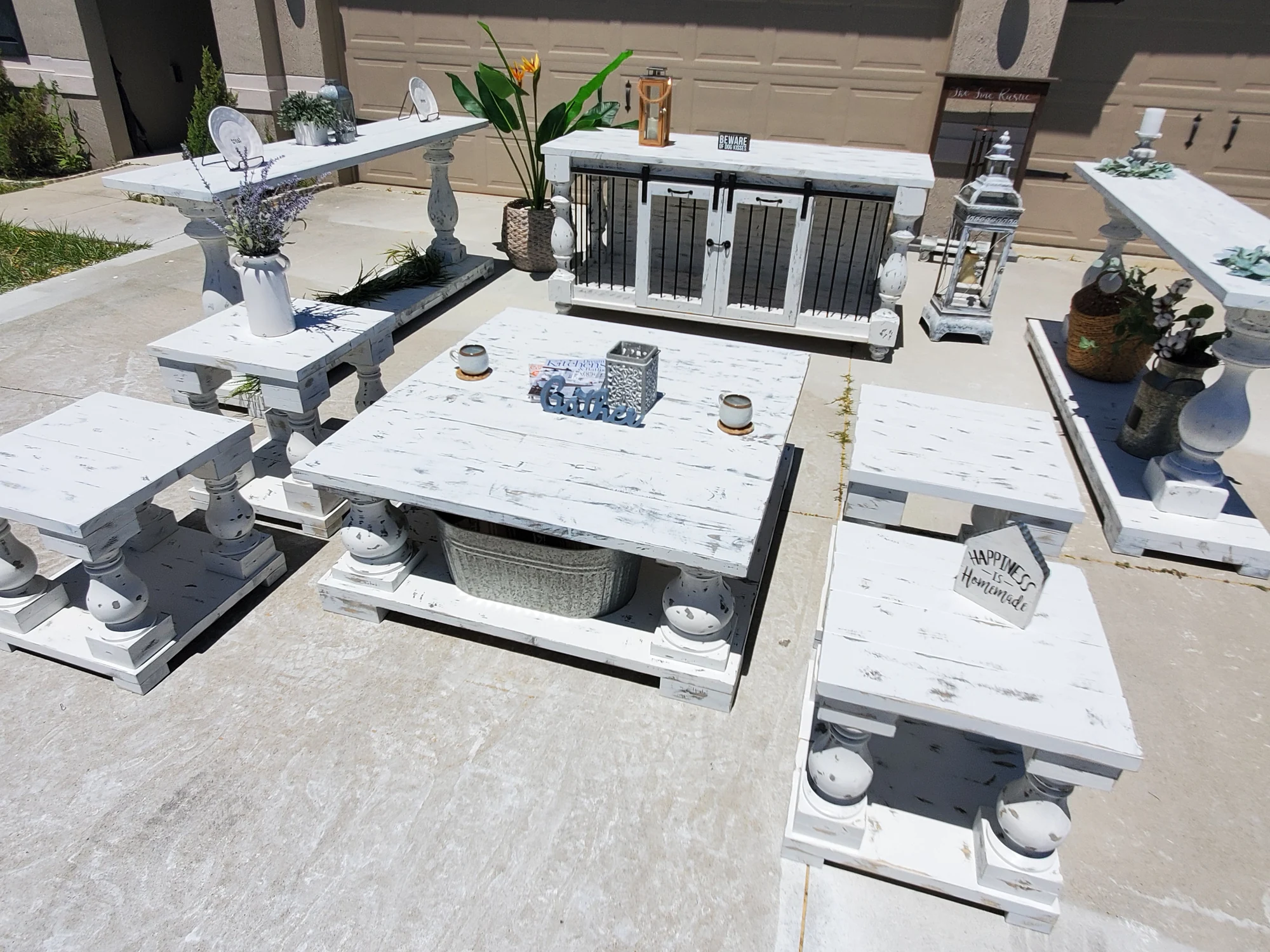
I like a coffee table that has enough presence to anchor a room without making it feel closed in. This one has a broad top, turned supports, and an open lower shelf. The weathered white finish keeps the group bright, while the worn texture gives the edges and legs character.
The smaller tables use the same visual language at a different scale. They make sense beside the larger piece because the color and forms repeat, but each has its own practical place. That matters to me more than making every part identical.
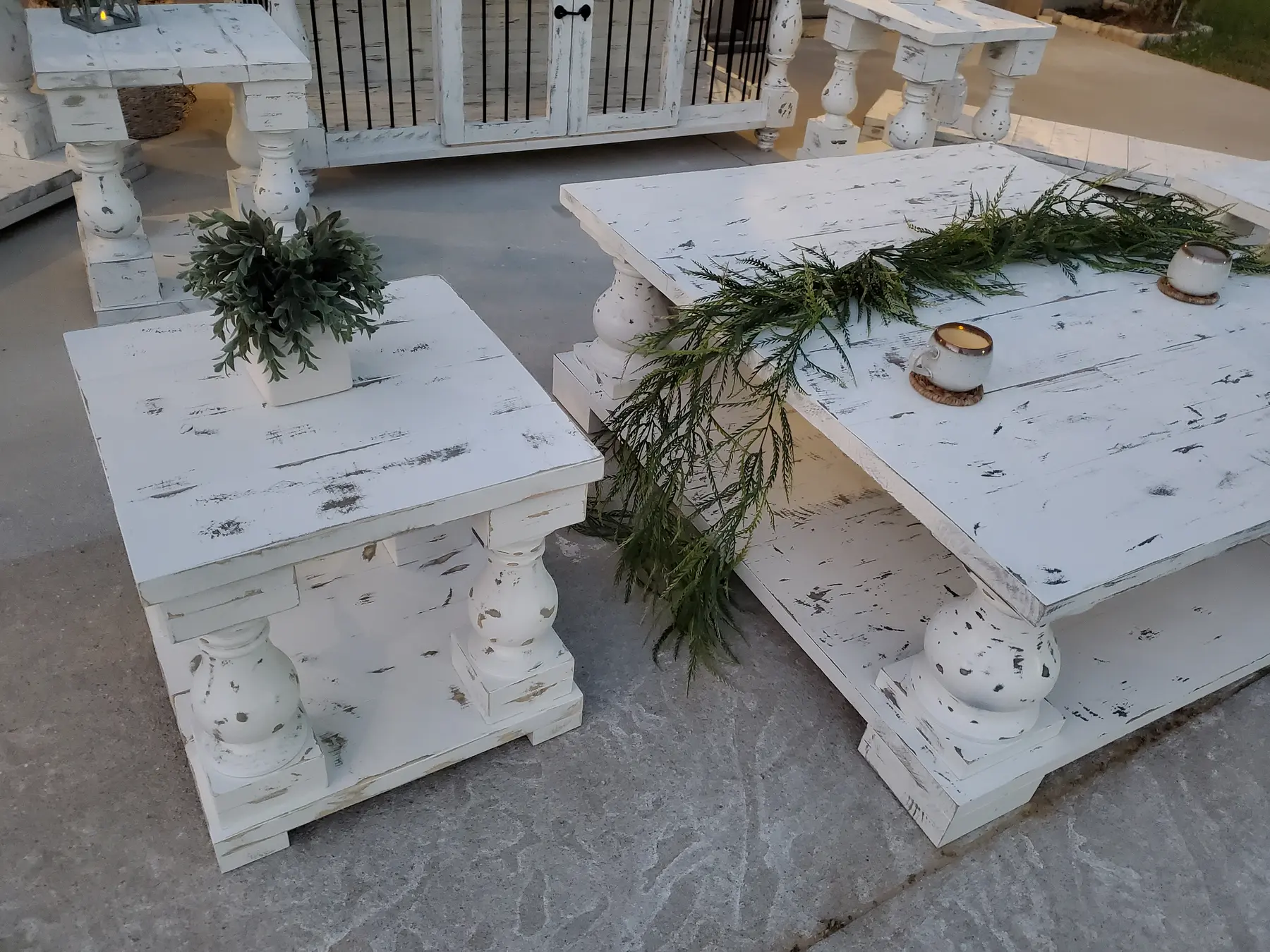
The couple were newlyweds living between Texas and Nevada at the time. After they saw the first set, they could picture what the same feeling might do elsewhere in their home. A returning order tells me more than a styled photograph can: the furniture felt right to live with.
Then the console
A console is longer and narrower, so it changes the rhythm of a room in a different way. I kept the distressed white character and turned details, but let the piece do its own work. It can serve a wall or an entry without pretending to be another coffee table.
From a distance, the pale finish ties the pieces together. Up close, the darker rubbed marks break up the white and make the surfaces feel less flat. I like that a group can look coherent without asking every piece to be the same size or shape.
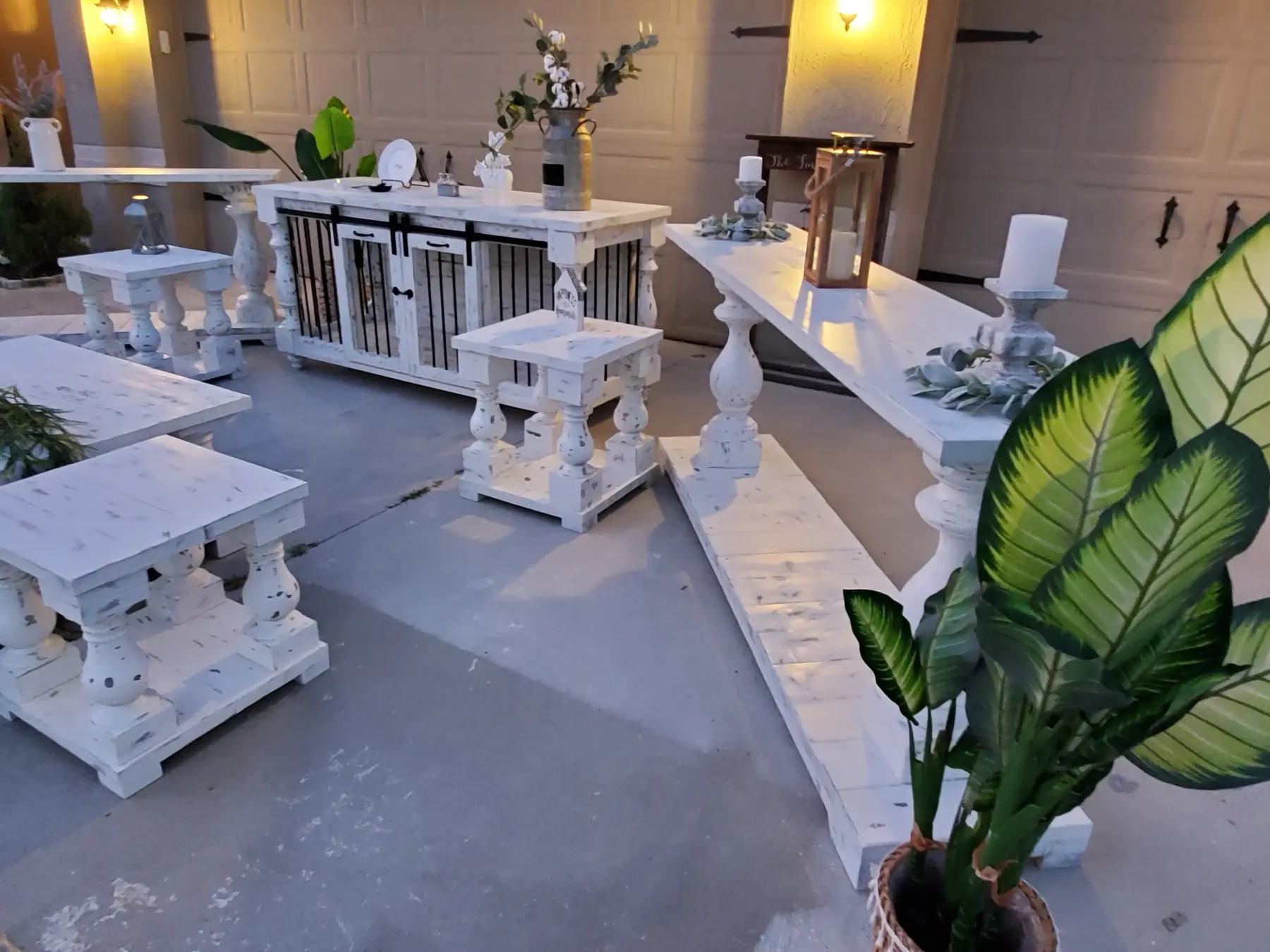
This is how I would approach adding a second piece to any room. First, live with the original for a little while. Notice how its finish looks in morning and evening light. Then decide what the new piece needs to do. Carry forward one or two details, but let function determine the new silhouette.
And a place for the dogs
The next request was a kennel. A dog crate can be a very visible object in a living space, so I understand wanting it to feel considered beside the other furniture. This one has a broad top, painted body, dark metal bars and hardware, and front doors that give it the presence of a cabinet.
The black lines make a crisp pattern against the weathered white. The top gives the piece a useful furniture-like surface. Its job is entirely different from the tables and console, yet it belongs to the same visual family.
These photographs show the finished look and layout, not a universal kennel plan. A pet piece should always be sized and arranged for the actual animals and their comfort. That practical part is as important as how it looks in the room.
A collection, not a catalog set
In the wide photo you can see several forms together: low tables, smaller companions, long consoles, and the kennel. The common finish makes the group feel connected, while each shape answers a different need. I like that the story of this order is visible in the variety.
The sequence is what makes this commission personal to me. First the coffee table set; then the console; then the dogs got their own piece. The customers did not start by demanding a room full of matching furniture. They chose the next thing because the first one had already earned its place.
If you are making a home one project at a time, let yourself do it that way. Choose the most useful piece first. See whether you love the color in your space. When you add another, repeat what worked and solve a new problem. That is how a collection can feel like yours.
Note
Matching does not mean identical. A shared finish can bring a home together while the coffee table, console, and kennel each keep their own purpose.
Joy